Choosing a Waterproof Equipment Case: A Procurement Checklist
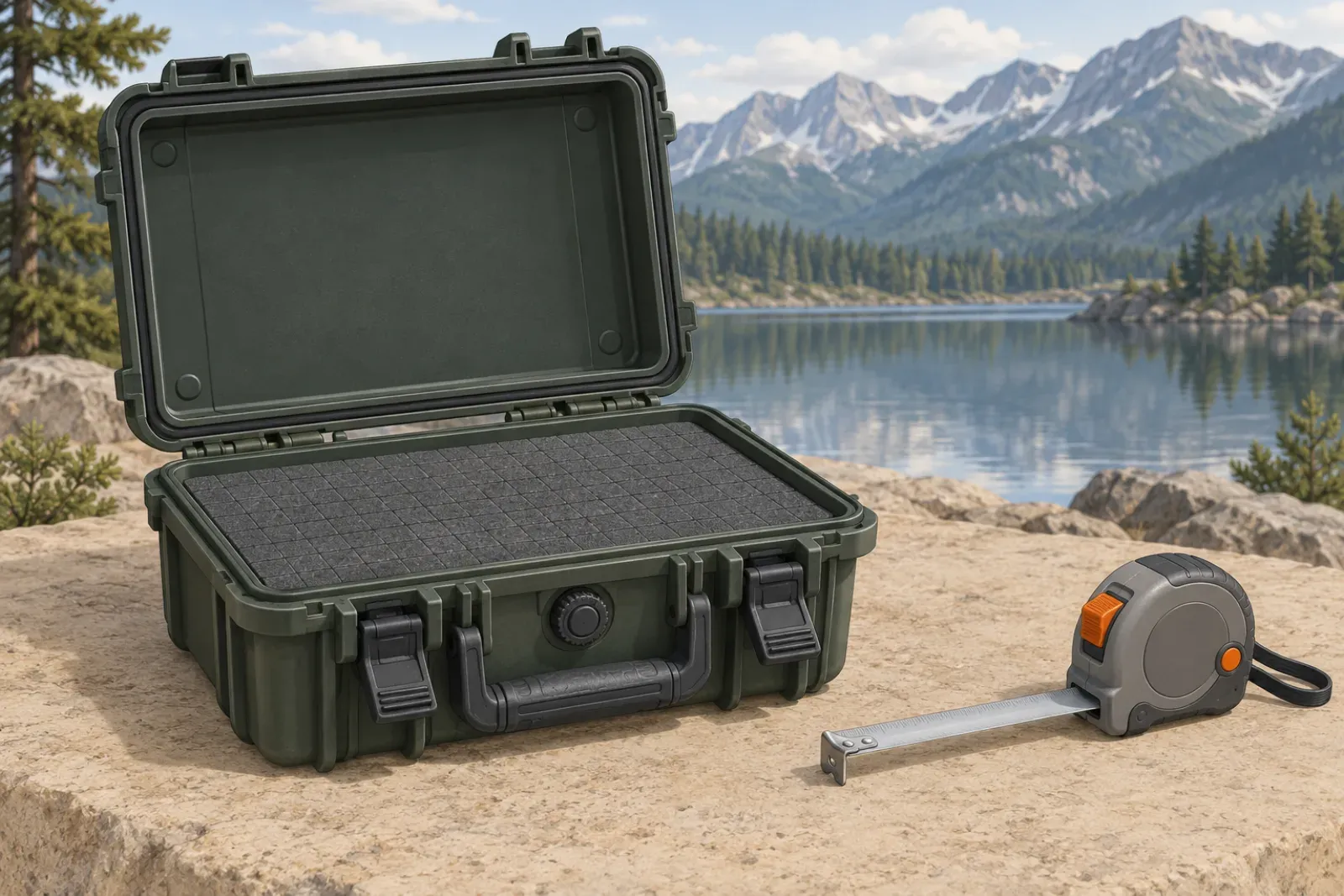
A waterproof case protects equipment only while it is closed, sealed and in good condition, and only against what it was designed and tested for. Choosing one is therefore a specification task: define what must fit, what must seal, what evidence you need and what you can maintain. This checklist belongs to the Cases & Protection hub and pairs with the explainer on reading IP ratings, which this page does not repeat.
Measure the equipment and required access
Begin with the equipment, not the case catalog.
- Equipment dimensions. Measure length, width and height with the equipment as it will be stored, including protruding handles, antennas, cables, adapters and spare parts that must travel with it.
- Interior versus exterior dimensions. Catalogs often list both. Only interior dimensions tell you what fits. Exterior dimensions matter for vehicle space, shelving and carry-on or transport limits.
- Lid depth and base depth. Interior depth is usually split between lid and base. Check how the equipment sits when the lid is closed, and where the foam presses on it.
- Foam clearance. Cut or pick-and-pluck foam takes up usable volume. Ask whether the stated interior dimensions are measured with or without the foam installed.
- Access. Decide whether the equipment must be used while inside the case, whether ports or cables must pass through, and how many people open the case and how often. A case that must be opened in the rain several times a day has different needs from one that seals once for a transport leg.
Record each measurement with its source (your tape, or the maker’s dimension drawing). Where the drawing and a catalog line disagree, request the drawing in writing.
Review seals, closures and published ratings
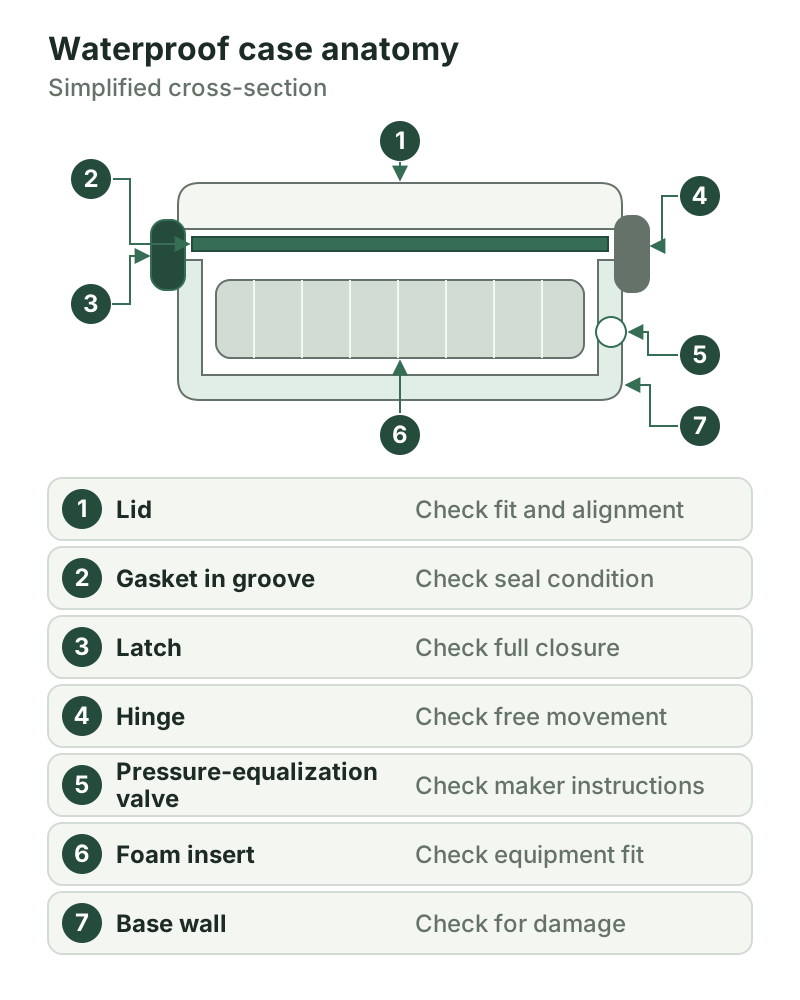
Seal. Most waterproof cases rely on a gasket or O-ring that compresses in a groove when the lid is latched. Ask:
- Is the seal a gasket or an O-ring, and does it sit in a groove on the lid, the base or both?
- Can the seal be replaced by the user, and is it sold as a spare part?
- What does the manual say about checking it for debris, cuts or flattening?
Latches. Check how many there are, whether they close with tension or a snap, whether they can be locked, and whether a bent or broken latch can be replaced individually. A latch that does not pull the lid fully down defeats the seal.
Hinges. Look at how the hinge is attached (integral or pinned), whether it can be replaced, and whether the lid opens to a stable angle on uneven ground.
Pressure-equalization valve. Many cases have one. A valve lets the internal pressure equalize after changes in altitude or temperature, which otherwise can make a sealed lid hard to open or stress the seal. Follow the maker’s instructions for when to open or close it. Ask whether the valve is replaceable and whether the published rating was tested with the valve fitted.
Stated ratings. A case may state an IP code or another protection claim. Treat it as a claim to verify (the IEC explains the code on its IP ratings page): which case size, which configuration, which standard and edition. The IP ratings guide explains the digits and what a code does not cover. A code on a case also does not describe protection for the equipment inside beyond the closed, sealed state.
Temperature range. Cases and their materials usually publish an operating or storage temperature range. Check the published range against your site conditions. Do not infer one from the plastic type.
Check the scope of any test report
Suppliers may offer a report for the rating or for another performance claim. The usual gaps are about scope, not about whether a report exists.
- Which case size? A report for one size does not automatically cover larger or smaller cases in the same line.
- Which configuration? Check latches, valve, foam, accessories and any custom modification such as cable pass-throughs or drilled holes.
- With or without the valve? Ask whether the valve was installed and in which position.
- Which standard and edition, which lab, which date? Match the report to the exact part number on your quote.
- Pass or fail, and any limits? Read the stated conclusion and conditions.
How to read a report in detail is covered in the guide to checking a supplier’s test report. Do not accept a rating as covering a size or option the report does not name. Where the evidence has gaps, record them as open items rather than closing them with assumptions.
This page gives no typical impact, drop or ingress figures for cases. Use only values published by the manufacturer and supported by a document you can read.
Review maintenance and spare-part availability
A waterproof case needs maintenance to stay waterproof. Before you buy, list the parts that wear and confirm each is available.
- Gaskets and O-rings. Are they sold separately, and do you receive part numbers?
- Latches and hinges. Can one be replaced without replacing the case?
- Valves. Is a replacement valve available, and what are the instructions for it?
- Foam and inserts. Can foam be reordered or recut? This matters when equipment changes.
- Wheels and handles. Check whether they are replaceable, and whether they are rated for the loaded weight the maker publishes.
- Cleaning and inspection. What does the manual say about cleaning the seal and groove, lubricants that are or are not allowed, and what to inspect?
Cases that cannot be inspected or repaired have a limited service life in a managed fleet. Add the maker’s inspection instructions to your maintenance schedule; do not invent intervals the manual does not give.
Stacking and handling. Cases that travel on vehicles or in storage may be stacked. Ask whether the case is designed to stack, whether the maker publishes a stacking or loaded-weight limit, and whether handles, wheels and padlock tabs suit the way your crew will actually carry it. For heavy contents, check the published maximum load.
Waterproof case procurement checklist
Use this checklist when comparing quotes. The Checklists & Templates page lists it with the other templates, and the CSV includes columns for the supplier’s response and notes.
| Item | What to specify or check | Evidence to request | Status |
|---|---|---|---|
| Interior dimensions | Length, width, depth with and without foam; lid and base depth | Dimension drawing | Open |
| Equipment access | Use inside the case; ports; opening frequency | Drawing or sample review | Open |
| Seal | Gasket or O-ring, groove location, user-replaceable | Manual; spare part number | Open |
| Latches and hinges | Number, locking option, replaceable | Parts list; manual | Open |
| Pressure valve | Fitted or not; operating instructions; replaceable | Manual; valve part number | Open |
| Rating claim | Stated code, standard, case size | Written claim; report | Open |
| Test report scope | Size, configuration, valve state, lab, date | Report matched to part number | Open |
| Foam and inserts | Type, cutouts, reorder or recut | Insert drawing | Open |
| Handling | Handles, wheels, stacking, published load | Data sheet | Open |
| Temperature range | Check the published range against site conditions | Data sheet | Open |
| Spares | Gaskets, latches, valves, foam, wheels | Spare parts list | Open |
| Maintenance and warranty | Cleaning and inspection steps; warranty scope | Manual; warranty text | Open |
Put the items that matter into your request for quotation so every supplier answers the same questions. The guide to writing an RFQ shows how to structure the specification and the response format. Reject a quote that leaves a mandatory item as “standard” without a document.
Limits of this checklist
This page is based on published documentation and general case construction, not on a lab test. It does not rank cases or state how any model performs in impact, drop or immersion conditions. Specific products vary, and a manual always outranks general advice here.
Downloads
Sources and versions
- Ingress Protection (IP) ratings , IEC Supports: Structure and meaning of IP codes (IEC 60529) used when reading a case's published rating
Next steps
How to Check an Equipment Supplier’s Test Report
How to check a supplier's equipment test report: document type, issuer, model and sample match, scope, conclusions, accreditation, plus a downloadable record.

How to Write an RFQ for Outdoor Equipment
How to write a request for quotation for outdoor equipment: measurable requirements, documents, commercial terms and a response table that makes quotes comparable.